Native Tree Society Projects and Surveys
The Native Tree Society is involved in a variety of projects and surveys of various
scales, scopes, and durations. A "project" involves an
investigations of a particular topic, species, or activity, while
a "survey" is an investigation of a particular site, area, or region. Some are long term ongoing
investigations
in which a particular site may be monitored for years. Others
involve studies of a series of sites in a particular region, or studies
of a particular species. Somemay be completed in a handful of
trips while others may require dozens. Some involve many
people while others are driven by the efforts of a single individual.
In all cases the goal is to complete the project using the highest
scientific standards.
|
Completed Projects |
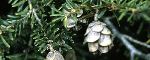 Tsuga
Search Project: The goal of the project was to
locate, document and preserve
exceptional specimens of eastern hemlock within
Great Smoky
Mountains National Park.
The NPS statement reads: The
primary partner for this project is The Eastern Native Tree Society (ENTS).
ENTS is non-profit organization devoted locating, measuring and
researching exceptional forests and individual trees of eastern North
America. For the past 12
years, ENTS members have documented unique hemlock forests and
have found trees that exceed the known size limits for the species.
ENTS researchers are the foremost experts in locating,
identifying, and documenting old growth hemlock forests. ENTS
members will be the primary researchers in surveying,
identifying, measuring, and documenting exceptionally large
eastern hemlocks in the park. This information will assist park
management in targeting important resources at risk and
prioritizing areas that require immediate systemic treatment.
The Project was under the direction of Will Blozan. Project Files: Tsuga
Search Tsuga
Search Project: The goal of the project was to
locate, document and preserve
exceptional specimens of eastern hemlock within
Great Smoky
Mountains National Park.
The NPS statement reads: The
primary partner for this project is The Eastern Native Tree Society (ENTS).
ENTS is non-profit organization devoted locating, measuring and
researching exceptional forests and individual trees of eastern North
America. For the past 12
years, ENTS members have documented unique hemlock forests and
have found trees that exceed the known size limits for the species.
ENTS researchers are the foremost experts in locating,
identifying, and documenting old growth hemlock forests. ENTS
members will be the primary researchers in surveying,
identifying, measuring, and documenting exceptionally large
eastern hemlocks in the park. This information will assist park
management in targeting important resources at risk and
prioritizing areas that require immediate systemic treatment.
The Project was under the direction of Will Blozan. Project Files: Tsuga
Search |
 Middleton Live Oak/Sag Branch
Tuliptree Project:
The goal of the project was to accurately measure the wood
volume of the Middleton Live Oak in
Middleton Place, South
Carolina and the Sag Branch Tuliptree in
Great Smoky Mountain
National Park. The project is completed and a final report
is awaiting an additional review of the data collected. A
preliminary summary can be found here:
Middleton Live oak/Sag
Branch Tuliptree Summary Partticipants included among others
Will Blozan, Robert Van Pelt, Randy Cyr, and
Ed Coyle.
Middleton Live Oak/Sag Branch
Tuliptree Project:
The goal of the project was to accurately measure the wood
volume of the Middleton Live Oak in
Middleton Place, South
Carolina and the Sag Branch Tuliptree in
Great Smoky Mountain
National Park. The project is completed and a final report
is awaiting an additional review of the data collected. A
preliminary summary can be found here:
Middleton Live oak/Sag
Branch Tuliptree Summary Partticipants included among others
Will Blozan, Robert Van Pelt, Randy Cyr, and
Ed Coyle. |
|
|
|
Ongoing Projects |
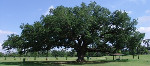 Live Oak Project: This goal of this ongoing project, headed by
Larry Tucei, is the
location and documentation of the large Live Oaks (Quercus vigininia)
found growing across the southern United States. As of
August 2011 Larry Tucei had documented and measured 170 Live Oak
trees with girths over 20 feet in southeastern United States. BBS:
Live Oak
Project
Live Oak Project: This goal of this ongoing project, headed by
Larry Tucei, is the
location and documentation of the large Live Oaks (Quercus vigininia)
found growing across the southern United States. As of
August 2011 Larry Tucei had documented and measured 170 Live Oak
trees with girths over 20 feet in southeastern United States. BBS:
Live Oak
Project |
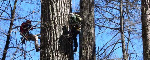 Great Smoky Mountains National Park
Tuliptree Project: The large tuliptrees (Liriodendron
tulipifera) within the park are being located and measured
in this project. The climbing and modeling of tuliptrees
in the GSMNP is being conducted under a a scientific research
permit assigned to Will Blozan, Jess Riddle, Josh Kelly, and
Robert Leverett. Will Blozan coordinates the activities and the
pace of that project. In April 2011, the tallest native
hardwood in North America, a tuliptree 190.1 feet tall, was
found in Fork Ridge within the park as part of this project.
It is . The tree was climbed and modeled as part of this
project. The location of this grove of tall tuiptrees was
determined through the use of LIDAR imagery of the area.
Project Files:
Fork Ridge Tuliptree
Great Smoky Mountains National Park
Tuliptree Project: The large tuliptrees (Liriodendron
tulipifera) within the park are being located and measured
in this project. The climbing and modeling of tuliptrees
in the GSMNP is being conducted under a a scientific research
permit assigned to Will Blozan, Jess Riddle, Josh Kelly, and
Robert Leverett. Will Blozan coordinates the activities and the
pace of that project. In April 2011, the tallest native
hardwood in North America, a tuliptree 190.1 feet tall, was
found in Fork Ridge within the park as part of this project.
It is . The tree was climbed and modeled as part of this
project. The location of this grove of tall tuiptrees was
determined through the use of LIDAR imagery of the area.
Project Files:
Fork Ridge Tuliptree |
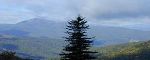 Blue Ridge Parkway Project:
The goal of the project is to document the old growth
and special forests along the
Blue Ridge Parkway and
Shenandoah National Park in Virginia and North Carolina and to
produce a book highlighting these features. The book is being
written by Robert Leverett and Monica Jakuc Leverett with the
participation of other NTS members. A scientific research permit
from the NPS for the project is held by Robert Leverett. BBS:
Blue
Ridge Parkway Project Blue Ridge Parkway Project:
The goal of the project is to document the old growth
and special forests along the
Blue Ridge Parkway and
Shenandoah National Park in Virginia and North Carolina and to
produce a book highlighting these features. The book is being
written by Robert Leverett and Monica Jakuc Leverett with the
participation of other NTS members. A scientific research permit
from the NPS for the project is held by Robert Leverett. BBS:
Blue
Ridge Parkway Project
|
 Trees Database
Project:
The Trees Database is an experimental project under development
by Mitch Galehouse and Steve Galehouse, with utilization by the
Native Tree Society in mind. This site allows you to
review, search, sort, add, and download information concerning
native(and exotic) tree species, including height, girth
dimension, geographic location, and site specifics. The intent
is to include as many tree species from as many locations as
possible to make it possible to compare tree species' size
potentials across their native ranges.
Trees Database
Project:
The Trees Database is an experimental project under development
by Mitch Galehouse and Steve Galehouse, with utilization by the
Native Tree Society in mind. This site allows you to
review, search, sort, add, and download information concerning
native(and exotic) tree species, including height, girth
dimension, geographic location, and site specifics. The intent
is to include as many tree species from as many locations as
possible to make it possible to compare tree species' size
potentials across their native ranges.
|
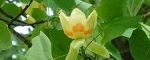 Liriodendron Height Project: This project is being coordinated
by Dr. Neil Pederson of the
Lamont-Doherty Earth Observatory of Columbia University.
The goal is to create a height map of tuliptree populations based
upon location and latitude based upon the high resolution height
data collected by NTS members.
Liriodendron Height Project: This project is being coordinated
by Dr. Neil Pederson of the
Lamont-Doherty Earth Observatory of Columbia University.
The goal is to create a height map of tuliptree populations based
upon location and latitude based upon the high resolution height
data collected by NTS members. |
 American Chestnut Project: The goal of this ongoing project, being headed by
James Parton,
is to locate and document the remnants of the once expansive
American chestnut forest that once populated the United States
prior to a devastating blight in the 1920's to 30's.
It is out goal to cooperate with the
American Chestnut Foundation
and the
American Chestnut Cooperators' Foundation in the pursuit of
this project. BBS:
American
Chestnut Project
American Chestnut Project: The goal of this ongoing project, being headed by
James Parton,
is to locate and document the remnants of the once expansive
American chestnut forest that once populated the United States
prior to a devastating blight in the 1920's to 30's.
It is out goal to cooperate with the
American Chestnut Foundation
and the
American Chestnut Cooperators' Foundation in the pursuit of
this project. BBS:
American
Chestnut Project |
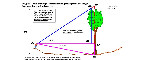 Dendromorphometry Book Project: Dr. Lee Frelich, Dr. Don
C. Bragg, and Dr. Robert Van Pelt, Will Blozan, Robert Leverett,
and Michael Taylor are writing a book on tree measurement expanding on the techniques
described in our measurement guidelines along with additional
techniques. The book will be entitled "Dendromorphometry - the Art and Science of Measuring Trees in
the Field." It is intended to serve as a credible book
reference for measurement techniques. In the meantime new
articles, essays, and diagrams will be posted in the
Bulletin of the Eastern Native
Tree Society and to the
NTS BBS. http://www.ents-bbs.org/viewtopic.php?f=235&t=3369
Dendromorphometry Book Project: Dr. Lee Frelich, Dr. Don
C. Bragg, and Dr. Robert Van Pelt, Will Blozan, Robert Leverett,
and Michael Taylor are writing a book on tree measurement expanding on the techniques
described in our measurement guidelines along with additional
techniques. The book will be entitled "Dendromorphometry - the Art and Science of Measuring Trees in
the Field." It is intended to serve as a credible book
reference for measurement techniques. In the meantime new
articles, essays, and diagrams will be posted in the
Bulletin of the Eastern Native
Tree Society and to the
NTS BBS. http://www.ents-bbs.org/viewtopic.php?f=235&t=3369
|
 White Pine Project:
The goal of the project is to create a height potential map for
eastern white pine (Pinus strobus) across its range
based upon the high resolution height data collected by the NTS.
The project is being coordinated by Dr. Lee Frelich, NTS Vice
President and Director of the center for Forest Ecology at the
University of Minnesota.
White Pine Project:
The goal of the project is to create a height potential map for
eastern white pine (Pinus strobus) across its range
based upon the high resolution height data collected by the NTS.
The project is being coordinated by Dr. Lee Frelich, NTS Vice
President and Director of the center for Forest Ecology at the
University of Minnesota. |
 Big Tree Listings Project:
This project is simply the
compilation of various maximum lists for tree species. The
most current max list, listing the maximums of height, girth, and
crown spread for trees measured by NTS members was compiled by
Jess
Riddle.
Big Tree Listings Project:
This project is simply the
compilation of various maximum lists for tree species. The
most current max list, listing the maximums of height, girth, and
crown spread for trees measured by NTS members was compiled by
Jess
Riddle.
|
 Liriodendron Project:
The goal of this ongoing project, being headed by Gary Beluzo,
is to document the range of tuliptrees (Liriodendron tulipifera) and collect information on the phenology of the
species. BBS:
Liriodendron Project
Liriodendron Project:
The goal of this ongoing project, being headed by Gary Beluzo,
is to document the range of tuliptrees (Liriodendron tulipifera) and collect information on the phenology of the
species. BBS:
Liriodendron Project |
 Triangle Height Measurement Method
Project:
Michael Taylor, in conjunction with Robert Leverett, developed this
modeling method for measuring the height of a tree using three
transit stations and 3 remote baselines. It involves the iterative
solution of 3 simultaneous equations. The process requires the
se of a computer program but can achieve accuracies of a centimeter
or less. Tree heights can be measured at distances of up to
one mile away. The derivation of the method is shown here:
http://www.landmarktrees.net/triangle.html and the required
computer programs can be downloaded here:
http://www.landmarktrees.net/software.html from Michael Taylor's
website. Further discussions can be found
here on our
BBS.
Triangle Height Measurement Method
Project:
Michael Taylor, in conjunction with Robert Leverett, developed this
modeling method for measuring the height of a tree using three
transit stations and 3 remote baselines. It involves the iterative
solution of 3 simultaneous equations. The process requires the
se of a computer program but can achieve accuracies of a centimeter
or less. Tree heights can be measured at distances of up to
one mile away. The derivation of the method is shown here:
http://www.landmarktrees.net/triangle.html and the required
computer programs can be downloaded here:
http://www.landmarktrees.net/software.html from Michael Taylor's
website. Further discussions can be found
here on our
BBS. |
 Bruce Kershner Project:
Bruce Kershner
r (April 17, 1950 - February 16, 2007) was an environmentalist,
author, and forest ecologist. Prior to his death he gave
copies of several of his unpublished or limited publication reports
to fellow NTS member Dale Luthringer. We are in the process
editing those documents for publication in our NTS special report
series. Two of the reports on old growth within the Niagara
River Gorge were written by Bruce as a Project of the
Bert Miler Nature
Club with funding from the
Trillium Foundation.
They are cooperating on the publishing effort. Another report
is of old growth forest at the
Landis Arboretum
forwarded by their arborist, Fred Breglia, for inclusion in the
project. A reports to Friends of Marcys Woods on
Marcy's Woods Nature Reserve,
Ontario and one on Hanlon Creek Heritage Maple Grove Forest
Survey Report to
Kortwright
Hills Community Association, Guelph, Ontario were included in
the reports given to us. We are awaiting permission to
reproduce these documents. Participants Include Edward
Frank, Dale Luthringer and Robert Leverett.
Bruce Kershner Project:
Bruce Kershner
r (April 17, 1950 - February 16, 2007) was an environmentalist,
author, and forest ecologist. Prior to his death he gave
copies of several of his unpublished or limited publication reports
to fellow NTS member Dale Luthringer. We are in the process
editing those documents for publication in our NTS special report
series. Two of the reports on old growth within the Niagara
River Gorge were written by Bruce as a Project of the
Bert Miler Nature
Club with funding from the
Trillium Foundation.
They are cooperating on the publishing effort. Another report
is of old growth forest at the
Landis Arboretum
forwarded by their arborist, Fred Breglia, for inclusion in the
project. A reports to Friends of Marcys Woods on
Marcy's Woods Nature Reserve,
Ontario and one on Hanlon Creek Heritage Maple Grove Forest
Survey Report to
Kortwright
Hills Community Association, Guelph, Ontario were included in
the reports given to us. We are awaiting permission to
reproduce these documents. Participants Include Edward
Frank, Dale Luthringer and Robert Leverett. |
 Aesthetics Project:
The
goal of this ongoing project, being headed by Edward Frank, is to examine
what it is about a particular tree, grove, or forest that tells you that
this is a special place? What is it that touches you in some way
on an emotional, spiritual, or aesthetic level?
Aesthetics Project:
The
goal of this ongoing project, being headed by Edward Frank, is to examine
what it is about a particular tree, grove, or forest that tells you that
this is a special place? What is it that touches you in some way
on an emotional, spiritual, or aesthetic level? |
 Tree Measurement Video Project: The goal of this project
is to develop a series of videos of tree measurement
procedures.
BBS: Tree
Measurement Video Project is being coordinated by
Edward Frank
Tree Measurement Video Project: The goal of this project
is to develop a series of videos of tree measurement
procedures.
BBS: Tree
Measurement Video Project is being coordinated by
Edward Frank |
 Singapore's Tallest: Search For Singapore's
Tallest Tree - To celebrate this years "Forests For People" as
part of the United Nations International Year of Forests; our
team will be searching for the tallest tree left on the mainland
of Singapore. Once we believe we have found the tallest tree our
aim is to measure the official height from the top-most part of
the tree, record the circumference of the trunk base, video the
canopy's condition and collect data
to put together a summary on the health of the tree. Our hope is
this data will help in continued efforts to preserve the long
life of Singapores Champion Trees.
http://www.facebook.com/pages/Singapores-Tallest/287920947891695
http://www.iclimbinc.com/
https://sites.google.com/site/singaporestallestcover/
The NTS is joining the support team for the effort and reports
from the search will be posted on our website as well as the
project sites above. The Project is being coordinated by
Jordan Glossop.
Singapore's Tallest: Search For Singapore's
Tallest Tree - To celebrate this years "Forests For People" as
part of the United Nations International Year of Forests; our
team will be searching for the tallest tree left on the mainland
of Singapore. Once we believe we have found the tallest tree our
aim is to measure the official height from the top-most part of
the tree, record the circumference of the trunk base, video the
canopy's condition and collect data
to put together a summary on the health of the tree. Our hope is
this data will help in continued efforts to preserve the long
life of Singapores Champion Trees.
http://www.facebook.com/pages/Singapores-Tallest/287920947891695
http://www.iclimbinc.com/
https://sites.google.com/site/singaporestallestcover/
The NTS is joining the support team for the effort and reports
from the search will be posted on our website as well as the
project sites above. The Project is being coordinated by
Jordan Glossop. |
|
|
|
Ongoing Surveys |
 Mohawk Trail State Forest Survey:
This project includes the documentation of
Mohawk
Trail State Forests, MA and long term monitoring of the trees
present. The NTS also provides expert opinion on the management of
MTSF and provides educational programming at the forest. The
research is being conducted in conjunction with
Friends of Mohawk Trail
State Forest and the
Massachusetts Department of Conservation and Recreation. The
project is headed by Robert Leverett. All the work
done on DCR properties is done under a special research permit from
given to Robert Leverett by DCR. DCR is the beneficiary of all the
data collected. Project Files:
Mohawk Trail State Forests, MA
[on BBS]
Mohawk Trail State Forest Survey:
This project includes the documentation of
Mohawk
Trail State Forests, MA and long term monitoring of the trees
present. The NTS also provides expert opinion on the management of
MTSF and provides educational programming at the forest. The
research is being conducted in conjunction with
Friends of Mohawk Trail
State Forest and the
Massachusetts Department of Conservation and Recreation. The
project is headed by Robert Leverett. All the work
done on DCR properties is done under a special research permit from
given to Robert Leverett by DCR. DCR is the beneficiary of all the
data collected. Project Files:
Mohawk Trail State Forests, MA
[on BBS] |
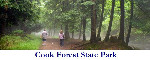 Cook Forest State Park Survey:
This is an ongoing project to map the great trees and old-growth forests of
Cook Forest State Park, PA. The park is home to several of
the tallest trees of their species found in the northeastern United
States, including the Longfellow Pine (Pinus strobus) at 184 feet tall.
There are seven distinct old-growth forest patches found within Cook
Forest that have been mapped as part of this project. The park
has served as host for several ENTS/NTS Rendezvous in the past,
tree measuring workshops. Old growth forest educational hikes are
conducted regularly at the park. This research is being
conducted in cooperation with
Cook Forest State Park and the
Pennsylvania
Department of Natural Resources . It is being
coordinated by Dale Luthringer, NTS member and Environmental
Education Specialist at Cook Forest State Park, with a number of
other NTS members contributing to the effort. Project Files:
Cook
Forest State Park, PA [on
the BBS]
Cook Forest State Park Survey:
This is an ongoing project to map the great trees and old-growth forests of
Cook Forest State Park, PA. The park is home to several of
the tallest trees of their species found in the northeastern United
States, including the Longfellow Pine (Pinus strobus) at 184 feet tall.
There are seven distinct old-growth forest patches found within Cook
Forest that have been mapped as part of this project. The park
has served as host for several ENTS/NTS Rendezvous in the past,
tree measuring workshops. Old growth forest educational hikes are
conducted regularly at the park. This research is being
conducted in cooperation with
Cook Forest State Park and the
Pennsylvania
Department of Natural Resources . It is being
coordinated by Dale Luthringer, NTS member and Environmental
Education Specialist at Cook Forest State Park, with a number of
other NTS members contributing to the effort. Project Files:
Cook
Forest State Park, PA [on
the BBS]
|
 William Cullen Bryant Homestead
Survey:
The project includes the documentation of old
growth forest on the grounds of the
William Cullen Bryant Homestead, MA. In addition the Pine
Loop Trail was mapped and laid out as part of this project.
The Pine Loop features enormous pines that reach heights of 150 feet
– a stand among the tallest in the Northeast. The project is being
conducted in cooperation with
The Trustees Of Reservations
and is being coordinated by Robert Leverett. The Trustees Of
Reservations has granted Robert Leverett special permission to
measure and report on important trees on the Bryant and other TTOR
properties towards the fulfillment of the NTS mission.
William Cullen Bryant Homestead
Survey:
The project includes the documentation of old
growth forest on the grounds of the
William Cullen Bryant Homestead, MA. In addition the Pine
Loop Trail was mapped and laid out as part of this project.
The Pine Loop features enormous pines that reach heights of 150 feet
– a stand among the tallest in the Northeast. The project is being
conducted in cooperation with
The Trustees Of Reservations
and is being coordinated by Robert Leverett. The Trustees Of
Reservations has granted Robert Leverett special permission to
measure and report on important trees on the Bryant and other TTOR
properties towards the fulfillment of the NTS mission.
|
 Great Smoky Mountains National
Park Survey:
Ongoing project to map the great trees and
old-growth forests found in
Great Smoky Mountains
National Park. Past projects have included the
Tsuga Search Project
and the Middleton Live Oak and
Sag Branch Tuliptree Project along with dozens of mapping
expeditions. The NTS currently holds research permits for
Great Smoky Mountains National Park. These efforts are being
coordinated by Will Blozan and Robert
Leverett. Project Files:
Great Smoky Mountains
National Park [on
the BBS]
Great Smoky Mountains National
Park Survey:
Ongoing project to map the great trees and
old-growth forests found in
Great Smoky Mountains
National Park. Past projects have included the
Tsuga Search Project
and the Middleton Live Oak and
Sag Branch Tuliptree Project along with dozens of mapping
expeditions. The NTS currently holds research permits for
Great Smoky Mountains National Park. These efforts are being
coordinated by Will Blozan and Robert
Leverett. Project Files:
Great Smoky Mountains
National Park [on
the BBS]
|
 Thomas Jefferson's Poplar Forest Survey: Documentation of the
big and tall trees of the Poplar Forest once owned by Thomas
Jefferson. The ongoing project has so far involved both ground based measurements
and a tree climb by Will Blozan to measure the volume of the largest
of the tuliptrees present on the estate. The modeling of the
tuliptrees at Thomas Jefferson's Poplar Forest Estate is a joint
NTS-Poplar Forest project. The project is being coordinated by
Robert Leverett and
Jack Gary, Chief Archeologist at Poplar Forest. Project Files: Poplar Forest
&
Tuliptree Volume Spreadsheet
Thomas Jefferson's Poplar Forest Survey: Documentation of the
big and tall trees of the Poplar Forest once owned by Thomas
Jefferson. The ongoing project has so far involved both ground based measurements
and a tree climb by Will Blozan to measure the volume of the largest
of the tuliptrees present on the estate. The modeling of the
tuliptrees at Thomas Jefferson's Poplar Forest Estate is a joint
NTS-Poplar Forest project. The project is being coordinated by
Robert Leverett and
Jack Gary, Chief Archeologist at Poplar Forest. Project Files: Poplar Forest
&
Tuliptree Volume Spreadsheet
|
 James Madison's Montpelier
Estate Survey: Documentation of the big and
tall trees of the James Madison estate
known as Montpelier in
Virginia. The ongoing work on the Madison Montpelier Estate is
done with permission of the authorities for that property. All
collected data go to them. This project is being conducted with the cooperation of
the Montpelier Foundation
and the
National Trust for Historic Preservation and is being
coordinated by NTS members Robert Leverett and
Will Blozan and
Sandra Mudrinich, horticulturalist for the estate. Project Files:
Montpelier
Estate
James Madison's Montpelier
Estate Survey: Documentation of the big and
tall trees of the James Madison estate
known as Montpelier in
Virginia. The ongoing work on the Madison Montpelier Estate is
done with permission of the authorities for that property. All
collected data go to them. This project is being conducted with the cooperation of
the Montpelier Foundation
and the
National Trust for Historic Preservation and is being
coordinated by NTS members Robert Leverett and
Will Blozan and
Sandra Mudrinich, horticulturalist for the estate. Project Files:
Montpelier
Estate
|
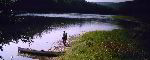 Allegheny River Corridor Survey: The goal of this project is to
document the trees and forests of the Allegheny River
corridor in Pennsylvania. The project will focus on the
islands in this stretch of the river including, but not
limited to, the islands of the Allegheny River Island
Wilderness. The project is being conducted by
Edward Frank, Dale Luthringer, Carl Harting, and
Anthony Kelley.
Allegheny River Corridor Survey: The goal of this project is to
document the trees and forests of the Allegheny River
corridor in Pennsylvania. The project will focus on the
islands in this stretch of the river including, but not
limited to, the islands of the Allegheny River Island
Wilderness. The project is being conducted by
Edward Frank, Dale Luthringer, Carl Harting, and
Anthony Kelley.
|
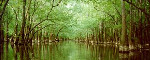 Congaree National Park Survey: NTS has been instrumental in
documenting the tallest tree of
Congaree National Park,
SC A formal measuring expedition was conducted from February
20-23, 2009 with a dozen people in attendance. The expedition
included exploration, ground based measurement, and several tree
climbs for measurement and mapping purposes. The expedition was
conducted under a research permit to Will Blozan. Project Files:
Congaree National Park Expedition 2009
Congaree National Park Survey: NTS has been instrumental in
documenting the tallest tree of
Congaree National Park,
SC A formal measuring expedition was conducted from February
20-23, 2009 with a dozen people in attendance. The expedition
included exploration, ground based measurement, and several tree
climbs for measurement and mapping purposes. The expedition was
conducted under a research permit to Will Blozan. Project Files:
Congaree National Park Expedition 2009
|
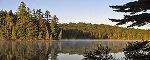 Adirondack Park Survey:
Adirondack Park encompasses about 6 million acres of parkland
and inholdings in the Adirondack Mountains of New York. This
project is in its inception. Explorations have been conducted
so far by a number of NTS members including Jess Riddle, Robert
Leverett, Eli Dickerson, John Davis, Tom Howard, and Michael Kudish.
Project Files:
Adirondacks
Adirondack Park Survey:
Adirondack Park encompasses about 6 million acres of parkland
and inholdings in the Adirondack Mountains of New York. This
project is in its inception. Explorations have been conducted
so far by a number of NTS members including Jess Riddle, Robert
Leverett, Eli Dickerson, John Davis, Tom Howard, and Michael Kudish.
Project Files:
Adirondacks
|
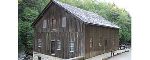 McConnells Mill State Park Survey: The project is to
document and measure the exceptional trees at
McConnells Mill State Park, PA. A special
collection permit was obtained by Edward Frank as part of this
project to sample a large basswood specimen for age dating found
along the trail. The project is being coordinated by
Anthony Kelley.
McConnells Mill State Park Survey: The project is to
document and measure the exceptional trees at
McConnells Mill State Park, PA. A special
collection permit was obtained by Edward Frank as part of this
project to sample a large basswood specimen for age dating found
along the trail. The project is being coordinated by
Anthony Kelley.
|
 Erie Gorges Survey:
There are a series of narrow gorges and ridgetops along the southern shore of Lake
Erie from northeastern Ohio to western New York. The gorges
cut through the escarpment above the lake shore plain through layers
of glacial till and generally soft underlying shale bedrock.
There are many patches of old growth forest and mature forest that
persist in these gorges due to the steepness of their sides and the
difficulty of logging in these areas. Investigations so far
have included parks in the
Cleveland Metro Parks System including North Chagrin
Reservation, Cuyahoga
Valley National Park, and
Holden Arboretum in
northeastern Ohio, and a series of gorges in Erie County
Pennsylvania. Chief investigators have included Steve Galehouse, Randy Brown, Dan Reed,
and Dale
Luthringer. Other contributers include Edward Frank,
Carl Harting, Mitch Galehouse, and Will Blozan. Robert Jetton of
Camcore
participated in one of the investigations of a disjunct population
of Carolina hemlock in Cuyahoga Valley National Park with Steve
Galehouse. Investigations at Holden Arboretum were conducted
in conjunction with staff members of the Arboretum. The goal
of the project is to investigate forests and trees found within
these gorges and compare the growth characteristics among them.
Erie Gorges Survey:
There are a series of narrow gorges and ridgetops along the southern shore of Lake
Erie from northeastern Ohio to western New York. The gorges
cut through the escarpment above the lake shore plain through layers
of glacial till and generally soft underlying shale bedrock.
There are many patches of old growth forest and mature forest that
persist in these gorges due to the steepness of their sides and the
difficulty of logging in these areas. Investigations so far
have included parks in the
Cleveland Metro Parks System including North Chagrin
Reservation, Cuyahoga
Valley National Park, and
Holden Arboretum in
northeastern Ohio, and a series of gorges in Erie County
Pennsylvania. Chief investigators have included Steve Galehouse, Randy Brown, Dan Reed,
and Dale
Luthringer. Other contributers include Edward Frank,
Carl Harting, Mitch Galehouse, and Will Blozan. Robert Jetton of
Camcore
participated in one of the investigations of a disjunct population
of Carolina hemlock in Cuyahoga Valley National Park with Steve
Galehouse. Investigations at Holden Arboretum were conducted
in conjunction with staff members of the Arboretum. The goal
of the project is to investigate forests and trees found within
these gorges and compare the growth characteristics among them.
|
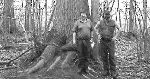 Lake Ontario - St. Lawrence
Lowlands Tree Survey: The project,
being headed by Tom Howard is to document
and measure the exceptional trees in the central New York
region. There are several exceptional old growth patches
in the northern Syracuse area, Rochester area, and Green Lake
State Park, among others. The project area includes most of
upper New York, excluding the Adirondacks and encompasses the
Erie-Ontario Lowlands and extending to
include the St. Lawrence Lowlands. Other participants
among others in
the survey include Adam Rosen and Dale
Luthringer.
Lake Ontario - St. Lawrence
Lowlands Tree Survey: The project,
being headed by Tom Howard is to document
and measure the exceptional trees in the central New York
region. There are several exceptional old growth patches
in the northern Syracuse area, Rochester area, and Green Lake
State Park, among others. The project area includes most of
upper New York, excluding the Adirondacks and encompasses the
Erie-Ontario Lowlands and extending to
include the St. Lawrence Lowlands. Other participants
among others in
the survey include Adam Rosen and Dale
Luthringer.
|
 Winterthur Survey: Documentation of the large trees at the
Winterthur Museum,Garden and
Library in Wilmington, Delaware. This exploratory trip took
place on September 10, 2010 by Will Blozan, George Fieo,
and Scott Wade and was coordinated with the staff at Winterthur. Project
Files:
Winterthur
Winterthur Survey: Documentation of the large trees at the
Winterthur Museum,Garden and
Library in Wilmington, Delaware. This exploratory trip took
place on September 10, 2010 by Will Blozan, George Fieo,
and Scott Wade and was coordinated with the staff at Winterthur. Project
Files:
Winterthur |
 Morristown National Historic Park
Survey:
Investigations and measurements of the tree at
Morristown National
Historic Park, NJ by Robert leverett and
Monica Jakuc Leverett. This ongoing
project is being conducted in coordination with park biologist
Robert Masson.
Morristown National Historic Park
Survey:
Investigations and measurements of the tree at
Morristown National
Historic Park, NJ by Robert leverett and
Monica Jakuc Leverett. This ongoing
project is being conducted in coordination with park biologist
Robert Masson. |
|
|

|
© Copyright
2002-2011 Eastern Native Tree Society
|